Cyber security consultancies are external partners providing specialised expertise in managing digital risks. They deliver services such as vulnerability assessments, penetration testing, and strategic guidance to protect systems, ensure compliance, and establish a robust security posture. For technology companies, they are critical collaborators in architecting secure products from the ground up.
Why Modern B2B Tech Companies Need Cyber Security Partners
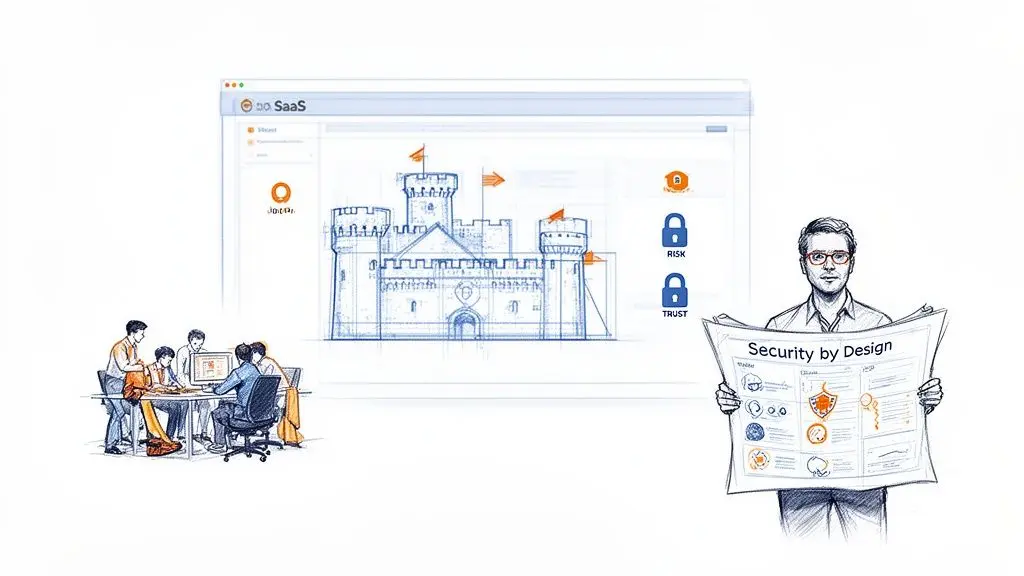
The problem is straightforward: building a competitive SaaS or AI product requires an intense focus on innovation and delivery speed. While your engineering team excels at creating features and solving complex business problems, expecting them to also master the constantly shifting landscape of cyber threats is a significant operational risk. When security relies solely on in-house, non-specialist talent, it often becomes a reactive measure applied long after a product is built.
This “bolt-on” approach to security is inefficient and exposes the business to unacceptable risk. Discovering fundamental architectural flaws late in the development cycle can trigger expensive refactoring, derail product launches, and erode customer trust. The financial and reputational cost of a data breach makes proactive security an essential business function, not an optional expense.
The Shift to Proactive Security-by-Design
A more effective strategy is to integrate security into the foundation of your product architecture. This is the principle of ‘Security by Design’—a methodology where security is treated as a primary requirement from the earliest planning and development stages. This is where cyber security consultancies provide critical value.
They act as specialist architects for your digital systems, bringing niche, up-to-date expertise that generalist developers focused on feature delivery cannot be expected to maintain.
A consultancy’s role is to challenge your assumptions, identify blind spots, and provide an objective perspective on your system’s weaknesses before an attacker does. This proactive stance separates resilient, trustworthy software from a future data breach headline.
The Growing Demand for Expertise
Market data confirms this trend. The cybersecurity consulting market is projected to grow significantly, driven by businesses grappling with increasingly sophisticated threats and complex regulatory environments like NIS2 and DORA. This is not a temporary trend; it is a structural response to a new reality of digital risk.
Engaging a consultancy provides several distinct advantages:
- Access to Specialised Skills: You gain immediate access to experts in specific domains, whether it’s threat modelling for AI systems, penetration testing for cloud-native infrastructure, or navigating complex regulations. For more on architectural security, see our guide on on-premises vs cloud.
- Independent, Unbiased Assessment: An external partner delivers an objective audit of your security posture, free from the internal biases or organisational pressures that might cause an in-house team to downplay risks.
- Scalable Expertise: You can engage top-tier talent for a specific, high-stakes project—like a pre-launch penetration test or a due diligence audit—without the long-term overhead of hiring a full-time senior security engineer.
Ultimately, partnering with the right cyber security consultancy is a strategic investment in product resilience and business continuity. It is a pragmatic way to manage risk, ensure compliance, and build the customer trust that is essential for long-term success.
Decoding the Core Services of a Security Consultancy
When you engage a cyber security consultancy, you are not just purchasing a report; you are acquiring specialised expertise to solve specific business problems. Their services are not one-size-fits-all and are designed to address distinct technical and strategic challenges.
For a CTO or product leader, understanding these core services is essential for matching your company’s immediate needs with the right expertise. The objective is always a practical outcome—such as an actionable remediation plan or a more resilient system architecture—not just a list of theoretical vulnerabilities.
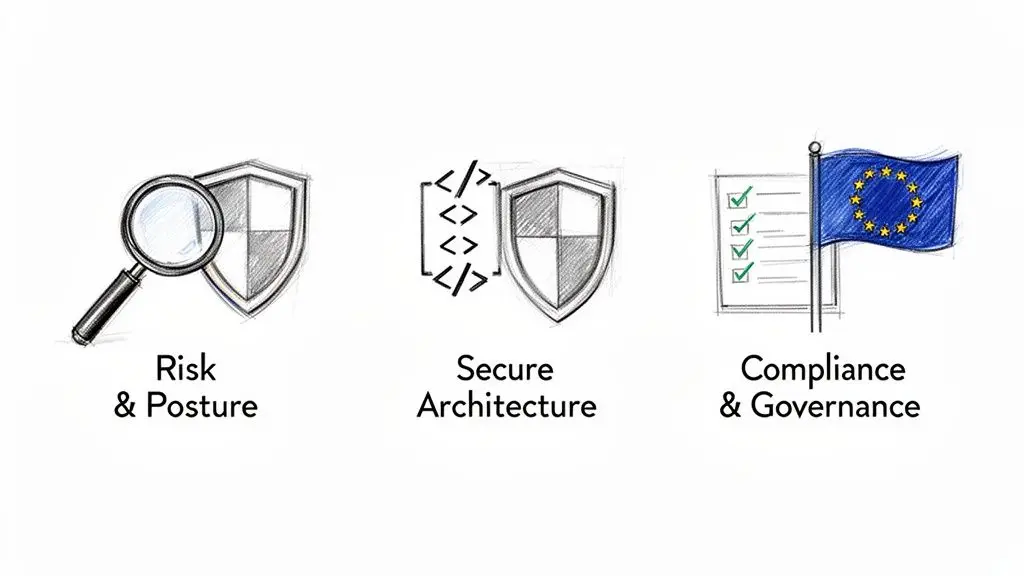
Let’s examine the three most critical service areas.
Risk and Posture Assessment
This is the starting point. A risk assessment identifies your current security state, answering the question: “Where are we vulnerable right now?” This allows you to prioritise remediation efforts based on actual risk. This category typically includes two main activities.
- Vulnerability Scanning: This is an automated, high-level survey of your systems. It uses tools to scan networks, applications, and infrastructure for known vulnerabilities, such as outdated software packages or common configuration errors. The output is typically a long, severity-graded list of potential issues.
- Penetration Testing (Pentesting): This is a manual, goal-oriented process. A skilled ethical hacker simulates a real-world attack to determine the extent to which your systems can be compromised. A vulnerability scan finds known unlocked doors; a penetration tester actively attempts to pick the locks, find open windows, and chain together minor weaknesses to achieve a significant breach. It reveals not just what is vulnerable, but how an attacker could exploit it to impact the business.
Scenario: Your SaaS platform has been in production for two years, with numerous feature updates deployed. A penetration test provides a real-world evaluation of how these cumulative changes have affected your attack surface, uncovering exploitable flaws that an automated scan would likely miss.
Secure Architecture and Code Review
These services shift the focus from finding existing flaws to preventing their introduction. The goal is to embed security into the Software Development Life Cycle (SDLC), embracing the principle that “privacy is an architectural choice.”
Engaging a consultancy for these services ensures your team builds on a solid, defensible foundation.
- Threat Modelling: This is a structured exercise conducted during the design phase. A consultant works with your architects to map out a system, identify potential threats based on its design, and specify controls before development begins. For example, when designing a new microservice that handles user data, threat modelling helps answer questions like, “How could an attacker abuse this API?” and “What controls are necessary to prevent unauthorised data access?”
- Secure SDLC & Code Review: A consultancy can help integrate security practices directly into your agile workflow. This may involve training developers on secure coding, automating security checks in your CI/CD pipeline, or performing manual reviews of critical code to identify subtle logic flaws that automated tools cannot detect.
Compliance and Governance Readiness
For any B2B company, particularly those in regulated sectors or handling sensitive data, compliance is a non-negotiable requirement. Cyber security consultancies are essential for preparing your technology and processes to meet the demands of regulations and standards.
These services translate dense legal text into concrete technical controls.
- Gap Analysis: A consultant evaluates your current security posture against a specific framework like ISO 27001 or regulations such as GDPR and NIS2. They identify where you fall short and create a prioritised roadmap to address these gaps. A key part of this often involves a formal Privacy Impact Assessment (PIA) to identify and mitigate risks related to personal data processing. You can learn more in our guide on how to conduct a Privacy Impact Assessment.
- Implementation Support: A good consultancy provides hands-on assistance to implement the necessary technical and organisational measures. This could mean configuring logging systems to meet audit requirements, establishing incident response plans, or setting up access control policies that align with regulations. This ensures you achieve robust, auditable security in practice, not just “compliance on paper.”
Mapping Business Challenges to Consultancy Services
Knowing which service you need can be difficult. This table maps common business triggers to the most relevant consultancy service, helping you identify the right expertise for your specific challenge.
| Business Challenge or Trigger Event | Relevant Consultancy Service | Primary Outcome |
|---|---|---|
| Designing a new product or major feature | Threat Modelling | A secure-by-design architecture that mitigates flaws before development begins. |
| Preparing for a funding round or M&A | Penetration Testing | An independent report on exploitable vulnerabilities to demonstrate due diligence. |
| Expanding into a regulated market | Gap Analysis (e.g., GDPR, NIS2, DORA) | A prioritised roadmap to achieve compliance with specific legal requirements. |
| Onboarding a major enterprise client | Compliance Implementation Support | Auditable proof that required security controls (e.g., for ISO 27001) are in place. |
| Recovering from a security incident | Penetration Testing & Secure SDLC Review | Identification of the root cause and a tactical plan to prevent recurrence. |
| Security concerns are slowing development | Secure SDLC & Code Review | Integration of security into developer workflows to reduce rework and build faster with confidence. |
Choosing the right service starts with identifying the business problem you need to solve. This ensures your investment in a security consultancy delivers measurable value.
Knowing When to Hire a Cyber Security Consultancy
Determining the right time to engage a cyber security consultancy is a strategic decision, not a reactive one. For proactive founders and CTOs, the timing of this engagement can be the difference between building a resilient foundation for growth and accumulating technical debt that leads to costly future remediation.
The primary problem with delaying security is that the cost to fix flaws rises exponentially through the development lifecycle. Discovering a fundamental architectural vulnerability in a mature product can cost up to 30 times more to fix than if it were identified during the design phase. The goal is to engage specialised help at key inflection points where risk increases or external validation is required.
Proactive Triggers for Engagement
Several key moments in a technology company’s lifecycle are clear signals that it’s time to engage a specialised partner. These are points where your risk profile changes significantly or when you need an independent assessment to move forward.
- Early-Stage Architectural Design: This is the most cost-effective time to engage. When first designing a new product, particularly one with a microservices architecture or complex data flows, threat modelling is invaluable. A consultancy can help identify and mitigate architectural weaknesses before any code is written, saving significant time and resources later.
- Integrating Third-Party Systems (Especially AI): Before integrating a third-party AI model or a critical data service into your stack, an expert security review is necessary. A consultancy can assess the security of integration points, analyse data leakage risks, and ensure the new service does not introduce a new attack vector. This is a non-negotiable step for maintaining privacy by design.
- Preparing for Due Diligence: When preparing for a funding round (e.g., Series A) or a potential acquisition, a thorough penetration test and security audit are essential. A clean report from a reputable firm provides investors and acquirers with confidence that your technology is sound and does not conceal significant liabilities.
- Expanding into New Markets or Segments: If you plan to expand into regions with strict regulations like the EU’s GDPR and NIS2, or enter sectors with specific requirements like FinTech’s DORA, expert guidance is critical. A consultancy can perform a gap analysis against these legal frameworks and guide the implementation of necessary technical controls, ensuring a smoother, compliant market entry.
A common and expensive mistake is to confuse product development with security engineering. A consultancy provides the focused security expertise that allows your product team to do what it does best: innovate and build.
A Simple Decision Framework
Deciding whether to handle a security task in-house or hire a consultancy can be framed by assessing the task against your team’s core competencies and capacity.
Ask these four questions:
- Is the required expertise highly specialised? (e.g., reverse-engineering malware, advanced mobile penetration testing). If yes, a consultancy is likely the correct choice.
- Is this a one-time or infrequent need? (e.g., an annual ISO 27001 audit, a pre-launch penetration test). A project-based engagement is more cost-effective than hiring a full-time employee for a periodic task.
- Do we need an objective, independent third-party opinion? This is crucial for investor due diligence, regulatory compliance, or challenging internal assumptions. If external validation is required, a consultancy is necessary.
- Does our internal team have the bandwidth to execute this without derailing the product roadmap? If your engineers are already at capacity, offloading a critical security project to specialists ensures it is completed correctly and on time.
If you answered “yes” to two or more of these questions, it is a strong signal that partnering with a cyber security consultancy is the pragmatic decision.
Your Checklist for Evaluating a Security Consultancy
Selecting the right partner from a field of cyber security consultancies is a critical decision for any CTO or compliance manager. The wrong choice can result in a wasted budget, unactionable reports, and a false sense of security. The right choice provides a long-term strategic asset.
To make an informed decision, you need a structured evaluation process that cuts through marketing claims. This checklist focuses on four pillars of competence. Use it to vet potential partners and ensure their capabilities align with your technical and business requirements.
Proven Technical Expertise
A consultancy’s value is derived from its team’s hands-on experience with your specific technology stack. Generic security knowledge is insufficient. An expert in traditional on-premise network security, for example, is likely unqualified to assess a containerised application deployed on Kubernetes.
Your objective is to verify their practical skills, not just their certifications. Ask precise questions that require them to demonstrate real-world knowledge.
Key Vetting Questions:
- “Our primary SaaS platform is built with [your core language/framework, e.g., Go] and deployed on AWS using Docker and ECS. Describe your team’s experience conducting penetration tests on this type of environment.”
- “Walk us through an instance where you identified a critical, non-obvious vulnerability in a system with a similar architecture. How did you guide the engineering team through the remediation?”
- “What specific tools and methodologies do you use for static and dynamic analysis of applications built with [your tech stack]? How do you filter noise to focus on actionable findings?”
Deep Industry Specialisation
Beyond technical skill, a top-tier consultancy understands your business model and its unique threat landscape. A firm that primarily serves large financial institutions might impose a cumbersome, compliance-heavy process unsuitable for a fast-moving SaaS startup.
You need a partner who understands the specific risks associated with your industry, whether it’s B2B SaaS, AI development, or FinTech.
A consultancy familiar with SaaS business models understands that protecting customer data is paramount, multi-tenancy creates unique security challenges, and API security is a critical control point. They tailor their assessment to your operational reality, not a generic checklist.
For instance, they should be able to discuss the security implications of a usage-based billing model or the risks inherent in an AI product that processes user-generated content. This specialisation makes their advice relevant and practical.
Clear Methodology and Deliverables
The engagement’s output is where many partnerships fail. A consultancy’s final report can be an actionable roadmap or a 200-page data dump that creates more confusion than clarity. Before signing a contract, demand absolute clarity on deliverables.
Vague promises of a “comprehensive report” are a red flag. Request sanitised examples of past deliverables. A high-quality penetration test report should always include:
- An Executive Summary: A concise, business-risk-focused overview for leadership.
- Prioritised Findings: Vulnerabilities ranked not just by a technical CVSS score, but by their potential impact on your business.
- Reproducible Steps: Clear, step-by-step instructions that allow your developers to replicate the issue.
- Actionable Remediation Guidance: Specific code examples, configuration changes, or architectural recommendations to resolve the flaw.
An effective methodology also includes clear communication protocols. For more on setting team expectations, see our guide on crafting a practical code of conduct for technical teams.
Team and Communication Style
Finally, evaluate the people you will be working with. You are hiring a team of experts, not buying a product. During the sales process, you may interact with a partner or sales lead, but the actual work will be performed by their consultants.
Request to speak directly with the project lead or key consultants who would be assigned to your engagement. Assess their communication style. Are they collaborative or condescending? Can they explain complex technical issues in a way your team can understand and act upon? Security findings can be stressful for an engineering team. A partner with a collaborative, educational approach is far more effective than one who merely points out flaws.
Understanding Engagement Models and True Costs
Engaging a cyber security consultancy is a strategic investment, not a simple purchase. To manage it effectively, you must understand how these engagements are structured and their real costs. Misunderstanding this can lead to budget overruns and mismatched expectations.
The engagement model dictates cost predictability, flexibility, and the nature of the partnership. The three most common models are Project-Based, Retainer, and Time & Materials (T&M). Each is suited to a different need.
Comparison of Consultancy Engagement Models
The right model depends entirely on your objective. A one-off security audit for a new product launch has different requirements than obtaining long-term strategic advice. This table breaks down the models to help you match your situation to the right structure.
| Engagement Model | Best For | Typical Cost Structure | Pros | Cons |
|---|---|---|---|---|
| Project-Based | Discrete, well-defined tasks like a penetration test, a threat model for a new feature, or an ISO 27001 gap analysis. | Fixed fee, defined in a Statement of Work (SOW). | Predictable costs, clear deliverables, defined timeline. Ideal for projects with a specific goal and budget. | Inflexible if scope changes. Not suited for ongoing security needs or addressing unexpected issues. |
| Retainer-Based | Continuous security oversight, such as a Virtual CISO (vCISO), ongoing compliance monitoring, or regular advisory sessions. | Recurring monthly or quarterly fee for a set number of hours or access to a dedicated team. | Builds a long-term partnership, ensures consistent focus on security, provides immediate access to experts. | Can be less cost-effective if allotted time is not fully utilised. Requires active management to ensure value. |
| Time & Materials (T&M) | Unpredictable or urgent situations like incident response, complex digital forensics, or exploratory research where the scope is unknown. | Billed based on actual hours worked at an agreed-upon hourly/daily rate, plus expenses. | Maximum flexibility to adapt to evolving situations. You only pay for the work performed. | Costs can escalate rapidly and are difficult to predict, making budgeting challenging. Requires tight project management. |
Choosing the right model is the first step in controlling costs and ensuring the partnership is successful. A fixed-fee project provides certainty, a retainer provides a strategic partner, and T&M provides an emergency response capability.
Estimating Realistic Costs and Timelines
While costs vary based on a firm’s reputation and project complexity, it is crucial to establish realistic budget expectations. Unrealistic budgeting can cause a project to fail by either under-scoping the work or causing sticker shock that kills the initiative.
Here are some real-world cost estimates:
- One-Time Penetration Test: For a typical SaaS application, budget between £8,000 and £25,000+. A simple web application will be at the lower end, while a complex platform with multiple microservices and mobile clients will be at the higher end. The engagement typically takes 2 to 4 weeks from kickoff to final report delivery.
- vCISO Retainer: This provides C-level security strategy without the cost of a full-time executive. Monthly retainers can range from £3,000 to £10,000+, depending on the hours required and consultant seniority. This is an ongoing relationship.
- Incident Response (T&M): This is the most unpredictable model. Senior incident responders can bill at £200 to £500+ per hour. An engagement could last a few days or several weeks, depending on the scale of the breach.
The most critical tool for controlling costs is a detailed Statement of Work (SOW). It must explicitly define the scope, deliverables, timeline, and exclusions. A vague SOW invites scope creep and unexpected invoices, turning a strategic partnership into a financial liability.
Defining KPIs for Measurable Improvement
To determine if your investment is delivering value, you must define Key Performance Indicators (KPIs) before the engagement begins. A vague goal like “improve our security” is not measurable and therefore not useful.
Effective KPIs connect the consultancy’s activities to tangible improvements in your security posture. Consider tracking metrics such as:
- Reduction in Time-to-Remediate Critical Vulnerabilities: Measure the average time it takes your engineering team to fix high-severity issues identified by the consultancy. This should decrease over time as processes improve.
- Decrease in High-Severity Findings: In subsequent tests, the number of critical or high-risk vulnerabilities should decline, indicating that internal security practices are maturing.
- Percentage of Codebase Covered by Automated Scans: If the goal is a Secure SDLC, track the proportion of your code automatically scanned for vulnerabilities within your CI/CD pipeline.
By structuring the engagement carefully and tracking meaningful metrics, you transform security spending from an expense into a measurable investment in your product’s resilience and your customers’ trust.
Turning Security Findings Into Actionable Work
A detailed security report provides no value if it remains unread in a shared drive. A common failure point in working with cyber security consultancies is not the quality of their findings, but the organisation’s inability to act on them.
The investment is only realised when an audit becomes a catalyst for continuous improvement within your engineering team. This requires a pragmatic process to integrate external findings into your existing workflows, translating abstract risks into concrete, developer-friendly tasks that fit your agile methodology.
This process transforms a one-off audit into a sustainable security improvement cycle.
Triaging Vulnerabilities Beyond CVSS
The first step is to triage the findings. A common but naive approach is to simply sort vulnerabilities by their Common Vulnerability Scoring System (CVSS) score and address them from the top down. This can lead to a misallocation of valuable engineering resources.
A “critical” CVSS score on a non-production, internal-only system with no access to sensitive data may pose far less actual business risk than a “medium” vulnerability on your core authentication service.
Triage must be based on contextual business risk. This requires asking more nuanced questions:
- What is the business impact? Does this vulnerability affect a critical business process, expose sensitive customer data, or impact a key revenue stream?
- How likely is exploitation? Is the vulnerability complex to exploit, or is it a simple flaw that could be targeted by automated tools?
- What is the system’s context? Is the affected asset internet-facing or internal? What is its function within your architecture?
This risk-based approach ensures your engineering team focuses on fixing the problems that pose the greatest threat to the business, not just those with the highest technical score.
The diagram below shows how findings from different engagement models must all feed into this operationalisation process.
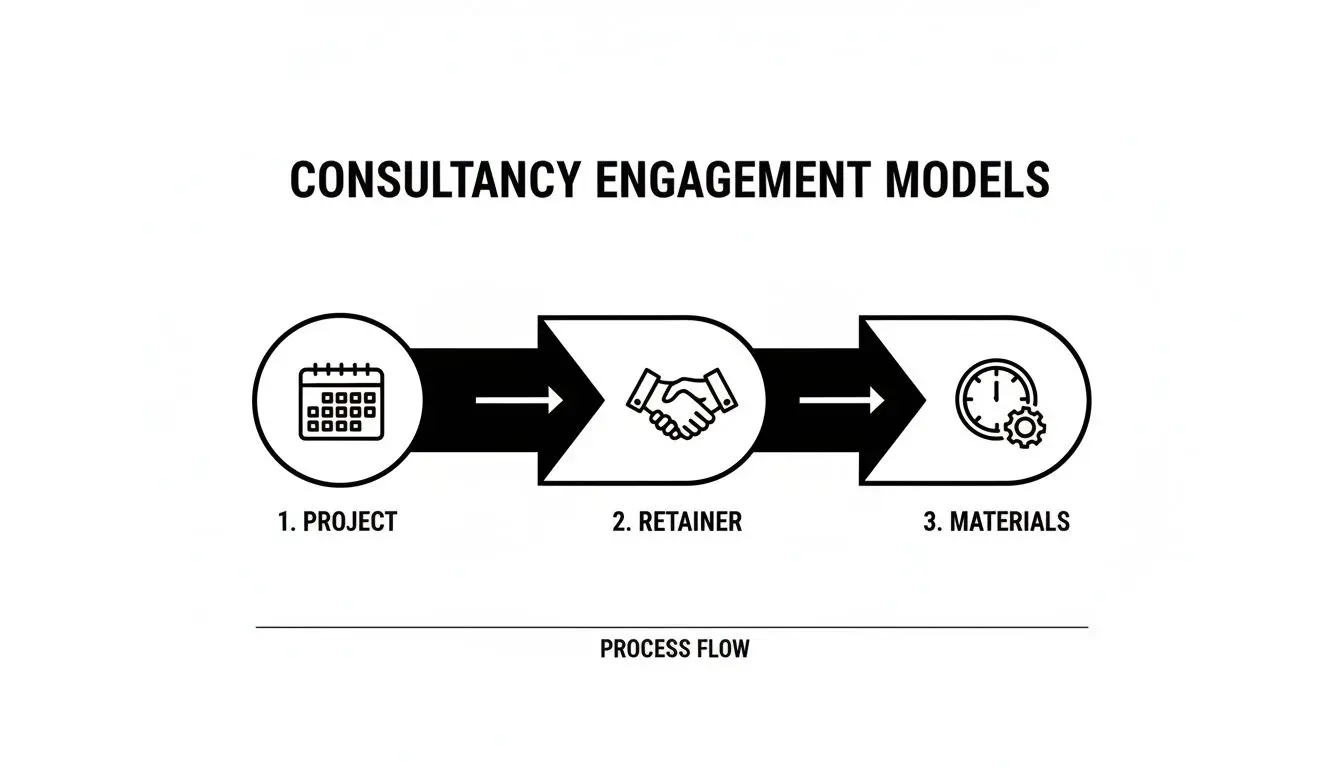
Regardless of the engagement model—be it a discrete project, a continuous retainer, or a flexible T&M arrangement—the findings must be operationalised to create value.
Integrating Findings into Agile Workflows
Once triaged, security findings must be translated into actionable work for your developers. A vague ticket like “Fix XSS vulnerability” is ineffective. Instead, create well-defined tickets in your project management system that a developer can execute.
A well-formed vulnerability ticket should include a clear description of the issue, steps to reproduce, specific remediation guidance (with code examples where possible), and the business context for its priority. This empowers developers by framing the security task as a solvable engineering problem.
Finally, use the consultancy’s findings as a feedback loop to improve your internal security capabilities. Treat their report as a set of case studies to refine your secure coding standards. For example, if they identify a specific type of injection flaw, create a standard to prevent it and add an automated linter rule to your CI/CD pipeline to detect it in the future. This is how you transform external advice into an enduring, internal security capability.
Frequently Asked Questions About Security Consultancies
When considering engaging a security consultancy, several practical questions typically arise. Here are direct answers to common queries from technical leaders, designed to aid your decision-making process.
How Often Should We Get a Penetration Test?
The standard industry recommendation is “annually,” but for a modern SaaS company with a high release velocity, this is often insufficient. Your testing frequency should be aligned with your rate of change.
We recommend a two-tiered approach:
- Comprehensive Annual Pentest: Once a year, conduct a deep-dive test covering your entire application and infrastructure. This serves as your critical security baseline.
- Targeted Delta Tests: After any major feature release or significant architectural change (e.g., adding a new microservice), run smaller, focused tests on the new components. This ensures that new code does not introduce a critical vulnerability between annual audits.
Can a Consultancy Make Us GDPR or NIS2 Compliant?
No, a consultancy cannot grant you legal compliance. However, they are an essential partner in the compliance process. They translate complex legal requirements like GDPR, NIS2, and DORA into concrete technical and organisational controls.
Their role is to perform a gap analysis, identify technical deficiencies, and assist in implementing the security measures required by law. They are not a substitute for legal counsel. Achieving compliance is a collaborative effort between your technical teams, legal advisors, and the consultancy.
What Is the Difference Between a Scan and a Pentest?
Understanding this distinction is crucial for defining the scope and value of the work you are purchasing.
A vulnerability scan is an automated check to see if your doors and windows are locked. A penetration test is a skilled expert actively trying to break those locks, find an open window, and determine what they can access.
A vulnerability scan is automated and fast. It checks for known weaknesses and common misconfigurations using predefined signatures. It identifies the “what.”
A penetration test is a manual, creative, and goal-oriented exercise. An ethical hacker mimics real-world attack techniques to exploit vulnerabilities, often chaining together minor flaws to achieve a significant impact. A pentest demonstrates the “how” and, more importantly, the business impact—the “so what.”
At Devisia, we build reliable digital products and AI-enabled systems with a focus on pragmatic architecture and long-term maintainability. Our product mindset ensures we deliver measurable business value, turning your vision into robust, secure software. Find out how we can help you build with confidence.